Slowdrive: physics-driven time trials starring a sleepy sloth
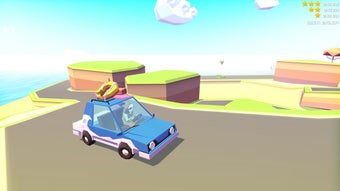
Navigate 60 physics-driven time-trial tracks piloting a sleepy sloth, choosing routes and exploiting momentum to shave seconds off your runs. Created by onebraverobot, the game mixes low-poly environments with a physics-based driving model and full controller support. Levels hide collectibles and multiple paths, and a ghost leaderboard lets you race past best times. The game fits players who enjoy quiet exploration, precision handling, and discovering shortcuts rather than pure arcade speed.
What kind of game asks you to master momentum, not top speed?
The game is a physics-based, time-trial racer that places emphasis on momentum and handling rather than outright velocity. Players progress through 60 short levels where tracks include moving platforms and multiple routes. The design forces you to learn how the car responds to slopes and collisions, because there are no performance upgrades and faster times come only from improving driving skill.
Does it offer meaningful modes and mechanics for repeat play?
The single-player structure focuses on short runs and route discovery, reinforced by a ghost system that lets you race against your best times or the global top-10. Hidden leaf collectibles in every level unlock visual car customizations, which encourage exploration beyond pure time-attack. Controller support is complete, letting you play with a gamepad rather than keyboard controls for tighter steering inputs.
What does the game look and how does it feel to control?
Visuals use a vibrant low-poly style across varied environments, from forests to cityscapes, which keeps each level visually distinct. Handling feels weighty and deliberate because the physics engine rewards momentum, so turns and ramps demand measured inputs. The interface centers on short runs and clear start/finish goals; graphics and visual cues make alternative routes visible without cluttering the screen.
How steep is the learning curve and what keeps you coming back?
Learning requires patience: the core loop is "observe, try a route, refine timing," and the game enforces that by removing mechanical progression. Replayability comes from route mastery, collectible hunting, and chasing ghost times on leaderboards. Short level lengths make repeated attempts low-friction, and the focus on precision means small improvements translate into noticeable time savings.
In summary, a paced pick for precision-focused time-trial players
The game rewards careful driving and curiosity: players who enjoy studying track geometry and finding shortcuts get the most from its design, while those looking for high-speed arcade thrills may find the deliberate pace frustrating. The game's quiet charm and skill-based progression make it a strong option for players who prefer measured challenges and repeated runs to master a single core mechanic.